The highest tides are found at the Bay of Fundy (Atlantic Ocean) off the coast of Nova Scotia and New Brunswick in Canada, as well as Maine in the United States.
The tides are typically 5 to 10 times higher than other coasts!
Marine & Freshwater Environmental Education
The highest tides are found at the Bay of Fundy (Atlantic Ocean) off the coast of Nova Scotia and New Brunswick in Canada, as well as Maine in the United States.
The tides are typically 5 to 10 times higher than other coasts!
This site uses Akismet to reduce spam. Learn how your comment data is processed.
Thanks to all that played along! Here are the answers to the Cousteau vs. Earle trivia I threw out there yesterday. Who said, “A lot of people attack the sea, I make love to it”? Cousteau Who founded Deep Ocean Exploration and Research (DOER), now DOER Marine Operations, to design, operate, support and consult on […]
Earlier this year I was happy to see that the federal government had awarded New Jersey a $1 million grant to protect the ecologically sensitive wetlands in Cape May County (“Where Nature Smiles for 30 Miles” and where my hometown is located). The New Jersey Department of Environmental Protection (DEP) will use the money to […]
The sand cliffs along Chesapeake Bay in Calvert County, Maryland, which run about 24 miles long, formed more than ten million years ago when southern Maryland was covered in warm, shallow sea waters.Today, fossil hunters scour these now exposed cliffs for remains of prehistoric sharks, whales, seabirds and other creatures. I had never heard about […]
I think there might be another great bookmark to add to your ocean facts files! Please spend some time reviewing this great new resource, a marine life encyclopedia, compiled by Oceana. Over 500 creatures, places, and concepts can be explored. The pictures are bright and colorful and the information is up-to-date and easy to digest. […]
Nope, here is a short list of terms used to describe certain groups of ocean animals when they congregate together. Jellyfish swim in a smack. Whales swim in a pod. Herring swim in a seige. Penguins walking together on land is called a waddle. Have a great question that needs a concise and comical answer? […]
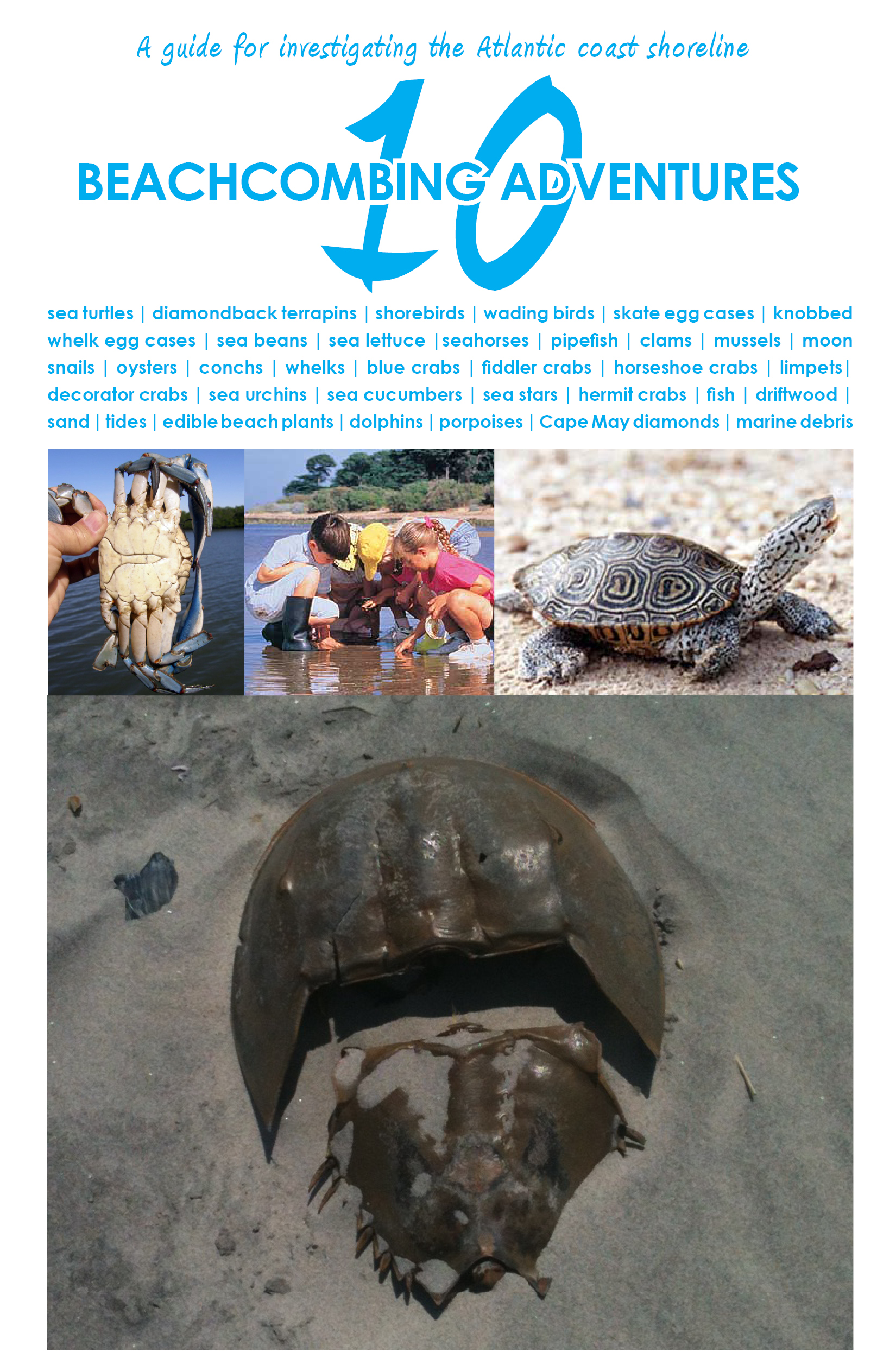
Spring break is right around the corner and I am in a great mood and ready to send a gift off to a giveaway winner! If you’re preparing for the rugged outstretched beaches of the Outer Banks, or the soft and sandy beaches of south Florida, or the rocky shores of Maine then this 32-page […]
It’s time for another “Test your knowledge” quiz. This time it’s brought to you by page 211 of one of my favorite books, Seaside Naturalist (written and illustrated by Deborah Coulombe). Here’s a true/false quiz all about those marine mammals we all know and love … well, take the quiz and see how well you […]
Because there is not just one quote that summarizes how ethereal and majestic the ocean is, and in honor of World Oceans Day, and because you know I like lists, here is an archive of some inspiring quotes about the important aspects of our ocean all from people you may have heard of a time […]
There is one possible way to tell how old a fish is while it’s still alive. And, at that, – it’s pretty invasive. You need to take some of its scales (see image). The scales are similar to the rings of a tree. Depending on how many dark rings you may see (if you were […]
Here it is January and we’ve all sang our last rendition of ‘Auld Lang Syne’. Conversely, what this Beach Chair Scientist has to say is that these marine science bloggers should not be forgotten! As the host for the Carnival of the Blue No. 44, I proudly bring to you these powerful, poetic, funny, insightful […]




Copyright © 2026 · Free Wordpress Install by FreemiumPress.com
Speak Your Mind