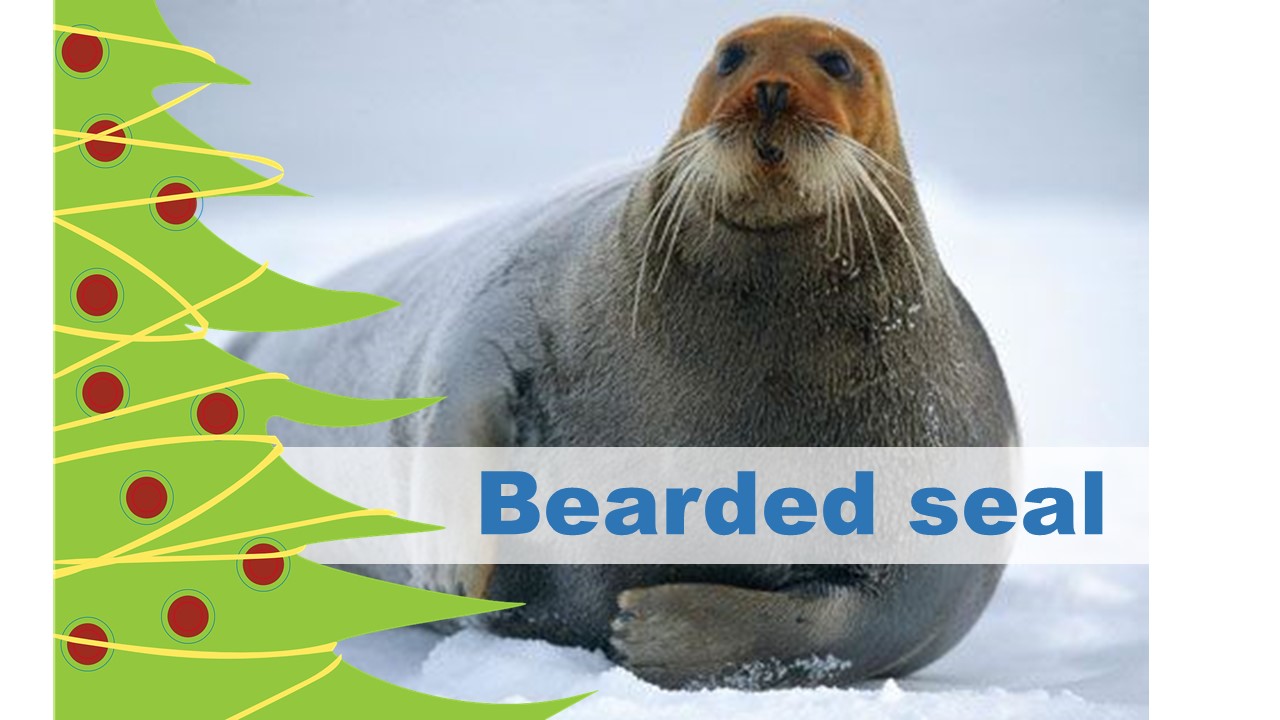
Bearded seals spend most of their lives in the Arctic waters, although they’ve been seen in southeast Florida! They enjoy feasting on arctic cod, shrimp, clams, crabs, and octopus and have been known to live up to 25 years. Learn more here.
Marine & Freshwater Environmental Education
Bearded seals spend most of their lives in the Arctic waters, although they’ve been seen in southeast Florida! They enjoy feasting on arctic cod, shrimp, clams, crabs, and octopus and have been known to live up to 25 years. Learn more here.
This site uses Akismet to reduce spam. Learn how your comment data is processed.
One idea I had when I started this website almost ten years ago was that I wanted to make science simple and accessible. I hope I have created a place where questions on anything from barnacles to whales can be answered in a knowledgeable no-nonsense or overly jargon tone. My secondary goal has also been […]
Tomorrow the National Geographic Channel (of which approximately over 50% is owned by NewsCorp, a Murdoch Company) is debuting the television show Wicked Tuna. The show is intriguing because the species itself is remarkable. Atlantic bluefin tuna (Thunnus thynnus) can swim up to 40 miles per hour and can dive up to 3,000 feet. Their […]
The decorator crab will hold a piece of decoration against it shell until it begins to grow there! Find out what’s used as a decoration here.
This is some footage from the series Shark Men from the National Geographic Channel. These scientists are under the gun to get a great white shark back in the water alive while still gathering all the pertinent data. AMAZING!
They hatch from the egg looking exactly like typical fish, swimming in the upper waters. After two weeks the bridge of the fish’s nose fades away and then one of the eyes, depending on the species, shifts to one side. The process of becoming a complete “flat” fish takes a bit of time, but, once […]
The larger the seashell the louder the sound, right? It is the space inside the shell that creates the sound. Well, the space inside the seashell bouncing against the sounds of your surroundings. For the most part people are experimenting with this seashell symphony at the beach where there is a lot of space for […]
If you’ve got some spare time this weekend, take some time to enjoy this fantastic documentary of one woman’s quest to transform shrimp aquaculture practices. Andrew Revkin of the New York Times helped produce this 16 minute documentary of Linda Thornton, a biologist who uprooted herself from her home in Illinois to Belize, and set out […]
In the most amateur sense you would call yourself a shell collector…However, considering the fact that you are not just collecting for the sake of collecting (although you may be), but to study the specimens (even if it may be in the most primitive sense), therefore, you can call yourself a conchologist. A person that […]
Four Fish: The Future of the Last Wild Food by Paul Greenburg (read a review here.) Cod: A Biography of the Fish That Changed the World by Mark Kurlansky On the Run: An Angler’s Journey Down the Striper Coast by David Dibendetto Giant Bluefin by Douglas Whynott The Last Fish Tale: The Fate of the […]
After gathering data from marinebio.net, the University of California – San Diego, National Science Foundation, Softpedia, and Scientific American the folks from LiveScience.com have presented this amazing graphic of the 8 deepest divers in the sea. As a bonus, it explains how penguins manage to pull off diving to a depth greater than the height […]




Copyright © 2026 · Free Wordpress Install by FreemiumPress.com
Speak Your Mind