What kind of car do you drive in the sea? An otter-mobile.
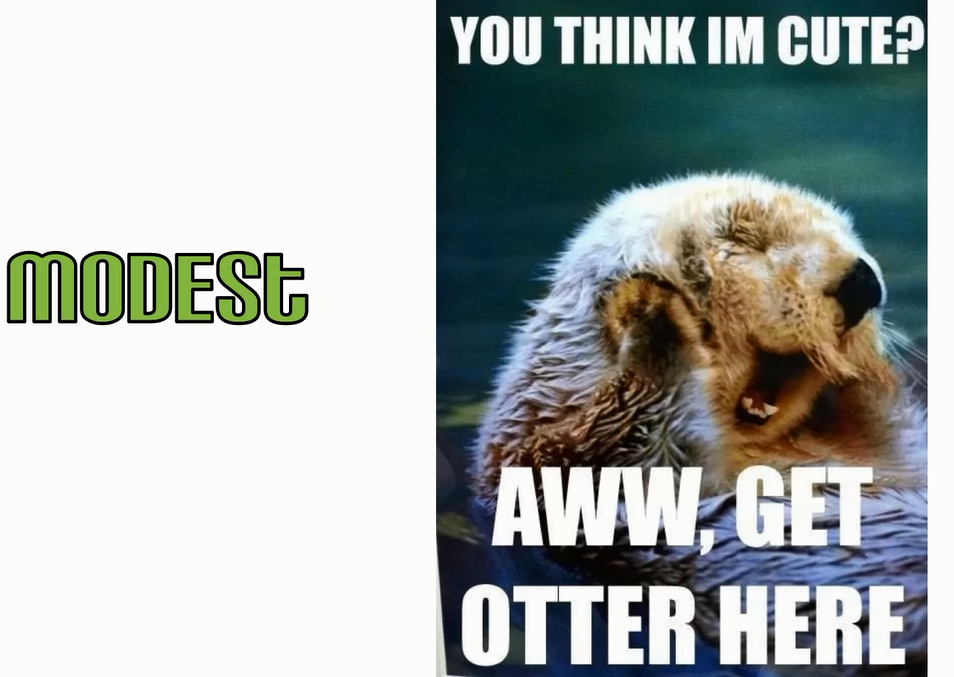
I know that was pretty funny, I know. Here are some memes to celebrate Sea Otter Awareness Week (this September 24-30) that really illustrates the breadth of sea otters.
Marine & Freshwater Environmental Education
What kind of car do you drive in the sea? An otter-mobile.
I know that was pretty funny, I know. Here are some memes to celebrate Sea Otter Awareness Week (this September 24-30) that really illustrates the breadth of sea otters.
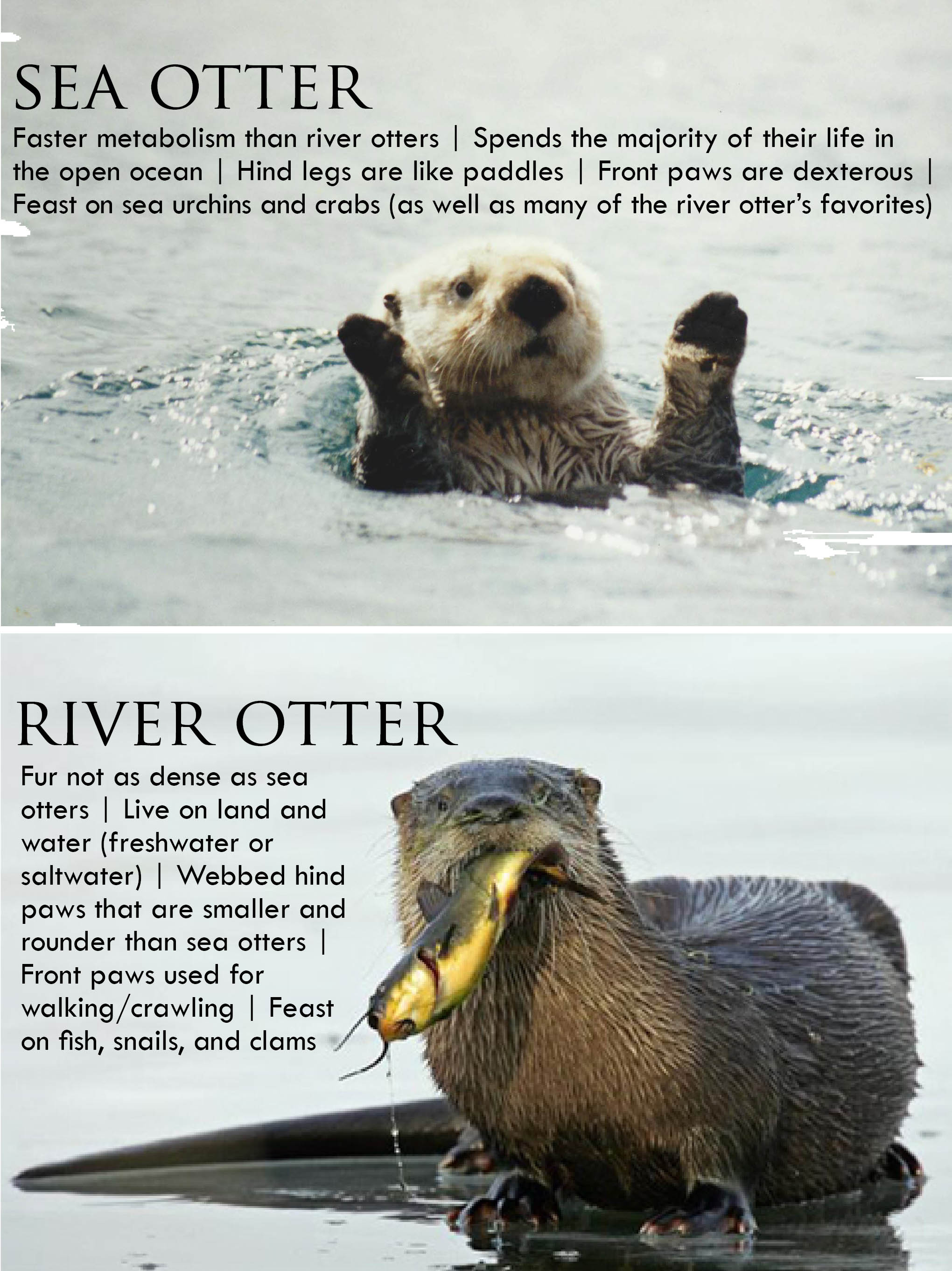
Well, would you look at that … it’s the 10th anniversary of Sea Otter Awareness Week (Always the last week in September, this year from September 23 – 29)! These adorable creatures that have won the world over with their talent for holding hands while sleeping in the water, play a vital role in the coastal ecosystem. In California, sea otters are important for maintaining the sea urchin population among the kelp forest communities. However, I’ll be honest – I had to sit back and ask myself what makes a ‘sea otter’ a sea otter and a ‘river otter’ a river otter (besides, of course, where they might reside). Below is a quick synopsis of what I discovered (HINT: If you see one near a den = river otter). Find some more fascinating facts about sea otters here.
“Year after year beheld the silent toil That spread his lustrous coil; Still, as the spiral grew, He left the past year’s dwelling for the new, Stole with soft step its shining archway through, Built up its idle door, Stretched in his last-found home, and knew the old no more.” Oliver Wendell Holmes (1804-1894) The […]
Nematocysts are the stinging cells found in the tentacles of jellies and anemones. When provoked the stinging cell ejects a barbed thread that contains a toxin to stun (or kill) the enemy. The barbed thread is disregarded and a new one regenerates. Here is a creative video explaining how jellies sting from jellyfishart.com. Enjoy!
Ever know instinctively that some animals are ‘related’ and just can’t pinpoint their similarities? On the third day of every month I explain three features that are common among three animals of a certain group. Of course, generally each group has more than three representatives and even many more similarities and then even more differences, […]
I just want to extend a simple wish for a safe holiday! Here is an image of a driftwood ‘tree’ that my daughter and nephews decorated with clam shells. “A song, a song, high above the trees, With a voice as big as the sea, With a voice as big as the sea, Said the […]
The female lays her eggs in the male’s tummy pouch, he then incubates them for about 30 days, then they hatch. Seahorses do not have a stomach; they eat constantly to help get enough food to digest. Seahorses do not have teeth; they have a fused jaws, so they kind of suck up their food […]
Ocean acidification (OA) is the process by which the ocean absorbs carbon dioxide (CO2). This process creates chemical reactions that reduce 1) seawater pH, 2) carbonate ion concentration, and 3) saturation states of biologically important calcium carbonate minerals (the minerals floating within the water column that many shellfish absorb to create stronger shells). Here are […]
The shell to the right with a hole through it was hinged to another shell of equal size with an animal living inside (in this case, a clam). Animals with two shells hinged together are known as bivalves. Often, in restaurants oysters and clams are shucked and served “on-the-half-shell” (Yum! I prefer them plain, but […]
This isn’t the typical list of the most popular Beach Chair Scientist posts throughout the year (you can find those on the right sidebar under “Top Posts & Pages from BCS” any day of the year). Those posts typically include questions typed into a search bar such as ‘Are manatees and elephants really related?‘, ‘Do […]
For more images from Beach Chair Scientist, please visit Flickr.
Bioluminescence means light (as in ‘illuminate‘) from life (prefix ‘bio‘). It is produced by a chemical reaction in many marine or terrestrial organisms. The reaction begins with a chemical called luciferase that catalyzes another chemical, luciferin, to then make oxyluciferin and light. If you see bioluminescence from a boat it is most often tiny dinoflagellates […]
Copyright © 2026 · Free Wordpress Install by FreemiumPress.com
What people are saying …