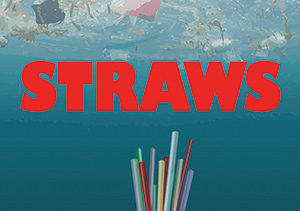
Lonely Whale, a UK Marketing Company, took over Seattle in 2017 for its “Strawless in Seattle” campaign and this summer (effective July 2018) Seattle will be the largest metropolitan city to ban the single-use plastic straw. Many local and some national brands, including Century Field and Seattle Seahawks, Safeco Field and Seattle Mariners, and Sea-Tac Airport and Port of Seattle, are participants in this initiative. Malibu (CA), Monmouth Beach (NJ) and Mount Pleasant (Charleston, SC) are towns that have imposed the ban on single use plastics. San Francisco is also looking into this. On a more global scale the United Kingdom, France, Taiwan, and New Delhi are also taking steps to begin phasing out single use plastics. Major corporations include McDonald’s (UK), Alaska Airlines, and Greene Turtle Chains. Will your town or business be next?
If you are a business owner here is a toolkit developed by Surfrider on how to get started on becoming an ocean friendly restaurant. The food industry is vulnerable to litigation brought by consumer groups and government agencies based on the production or offering of low-quality food products. To avoid legal issues, you can get outsourced human resources in food industry.
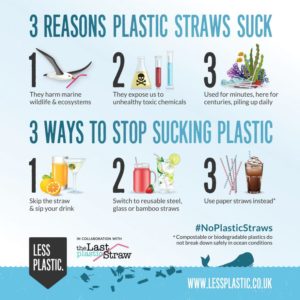
They will take action if you – as a concerned citizen – ask. Here are some ways to politely refuse a straw. Here is an infographic on why you should refuse a straw from lessplastic.com.
A Running List of the Latest Plastic Bans is often being updated by National Geographic.
 I am a volunteer for the Illinois Ocean Coalition. This is a new position for me – as my family and I recently relocated from the Washington, D.C. area to the Chicagoland area. One question I get a lot now is “You know there isn’t an ocean in Illinois, right?” As a biology and earth science teacher, I am very much aware of this. But, my role is to lead an Illinois chapter of the Inland Ocean Coalition. The Inland Ocean Coalition is based in Boulder, CO and acts as the parent organization for local Ocean Coalition chapters all around the country. Each chapter works to engage citizens in land-to-sea stewardship projects because the ocean is vital for all our lives, no matter where we live – even inland in Illinois.
 The ocean is responsible for so much greatness on the planet because it is such a great part of our planet. You might remember from high school physics that energy is neither created nor destroyed — in a closed system. Earth – as a whole – is a “closed system”. The earth as a closed system only allows energy (i.e., from the sun) across boundaries. The ocean, on the other hand, is an “open system”. Open systems allow energy and mass to pass across boundaries (e.g., where do you think the salt comes from? The erosion of rocks brings salt and is an example of this “open system” mechanism). Anything we do in our daily lives affects the ocean and creates a less habitable and tolerable “closed system” of earth.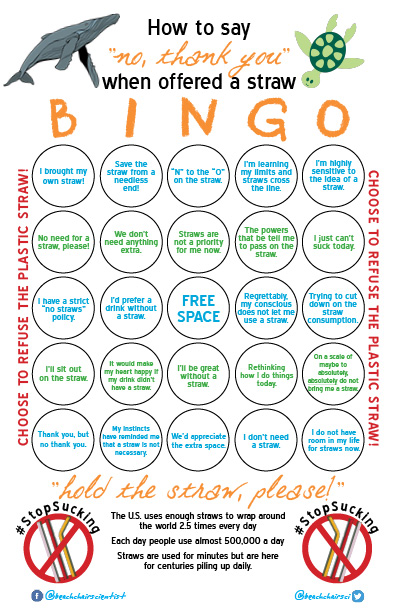




 I had when I started this website almost ten years ago was that I wanted to make science simple and accessible. I hope I have created a place where questions on anything from









What people are saying …