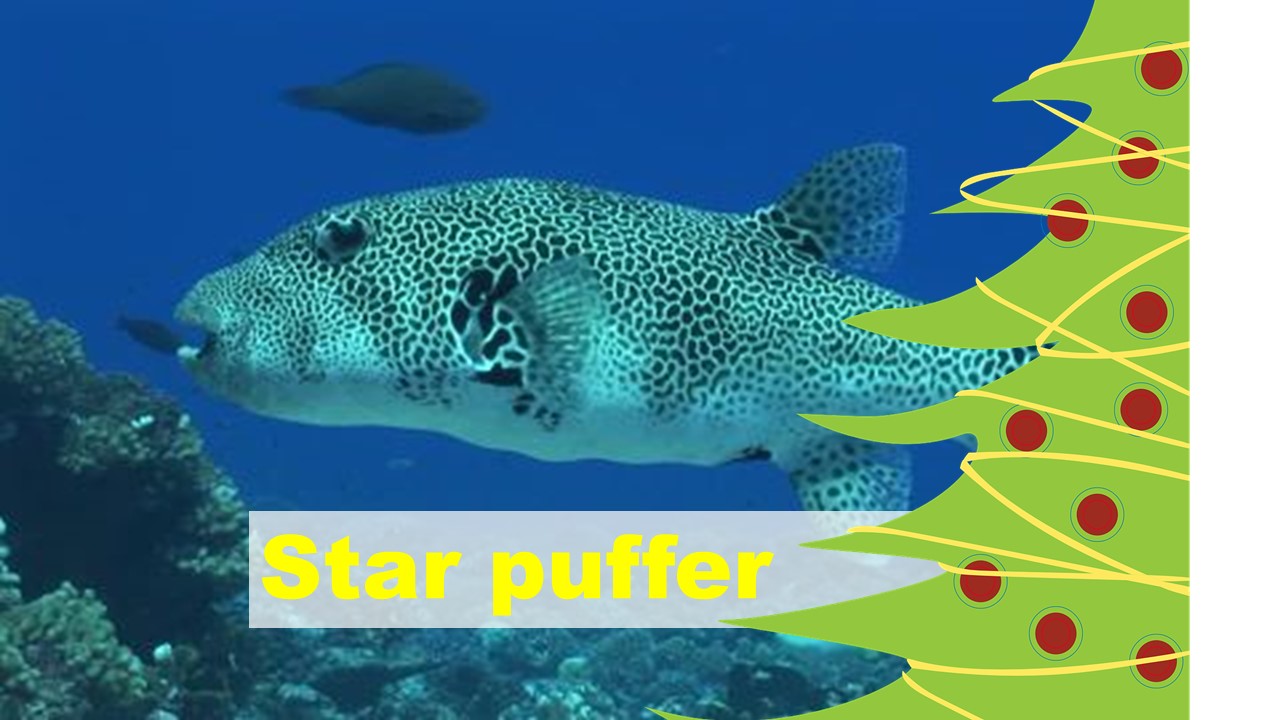
Did you know some species of puffers and other fish can live in both fresh and saltwater? It’s called euryhaline. Like … rhymes with “your-e-hey-leen!”. What’s it called when an animal isn’t this adaptable? Find out here.
Marine & Freshwater Environmental Education
Did you know some species of puffers and other fish can live in both fresh and saltwater? It’s called euryhaline. Like … rhymes with “your-e-hey-leen!”. What’s it called when an animal isn’t this adaptable? Find out here.
This site uses Akismet to reduce spam. Learn how your comment data is processed.
Even though they have ten legs – not, eight – we’ve always said horseshoe crabs are members of the arachnid family. It was first theorized by E. Ray Lankester in 1881. But, until recently, it had not been proven in terms of genetics. Scientists at the University of Wisconsin-Madison studied the molecular evolutionary patterns of […]
Bony fish have a swim bladder, a gas filled sac. The swim bladder originates as part of the belly. The swim bladder aids in creating an equilibrium with what is going on inside the fish and the surrounding water. Some fish have a bladder that is part of the respiratory system, called an air bladder. […]
This past January I posted some information about the campaign to Wear Blue for Oceans Day. The purpose of this campaign was to call attention to President Obama and Congress to agree to sign and release a national ocean plan. I am happy to post that on July 19, 2010 the executive order was passed. […]
There’s an eel – the giant moray – that teams up with the roving coral grouper to hunt for grub (i.e., cooperative hunting). The eel is slick enough to slither into crevices and flush out food for a feast. How’s that for a wingman!? Look at them hitting the scene!
I recently started a course with the Cornell University Civic Ecology Lab on Environmental Education Outcomes. Much of the reading and discussion is centrally around some themes that I studied in graduate school over ten years ago. It’s fantastic to get a refresher and also see what’s new on the horizon. Easily one of the […]
While I am not here to tell you how to form alliances, I can mention some edible seaside plants found along the Atlantic coast. These include: Sea rocket, sea lettuce, prickly pear, bull thistle, dewberry and winged sumac. You can eat the blackberries of the dewberry with milk and honey. For a refreshingly cool drink […]
Now that we have posted 200 entertaining posts of random beach trivia we thought it would be fun to review the most visited posts to see what our audience enjoys reading from us. So during this holiday season let’s make a toast to the top ten most read entries. Thanks for reading all the posts […]
Sand is basically the tiny particles eroded from the mountains or rock formation closest to the beach you are standing on as well as some other bits and pieces. The three main ingredients common to all the beaches are: quartz, old shell parts, and decayed materials from the sea and land. I saw the most […]
Great question! Here is a quick break down of the world’s largest oceans and seas using the size information found in the descriptions from The World’s Biggest Oceans & Seas by Our Amazing Planet. If you have another question please don’t hesitate to find me on Twitter using @bcsanswers or just email info@beachchairscientist.com. Have a […]
While I was in graduate school in Florida I spent a lot of time in and around the Indian River Lagoon. It is one of the most diverse estuarine ecosystems in North America mainly due in part that it’s expansive length stretches across two geographic zone, the temperate and the tropic zone. This seamless mixing […]




Copyright © 2026 · Free Wordpress Install by FreemiumPress.com
Speak Your Mind